
Caffeine in Pre-Workout Powders and Energy Formulas
What brand owners, formulators and contract manufacturers should confirm before selecting a caffeine ingredient for pre-workout powders, energy capsules, tablets, sachets and instant-drink premixes.
ModernVEDA™ · 20 October 2026
What Should Buyers Check Before Choosing Caffeine for These Formulas?
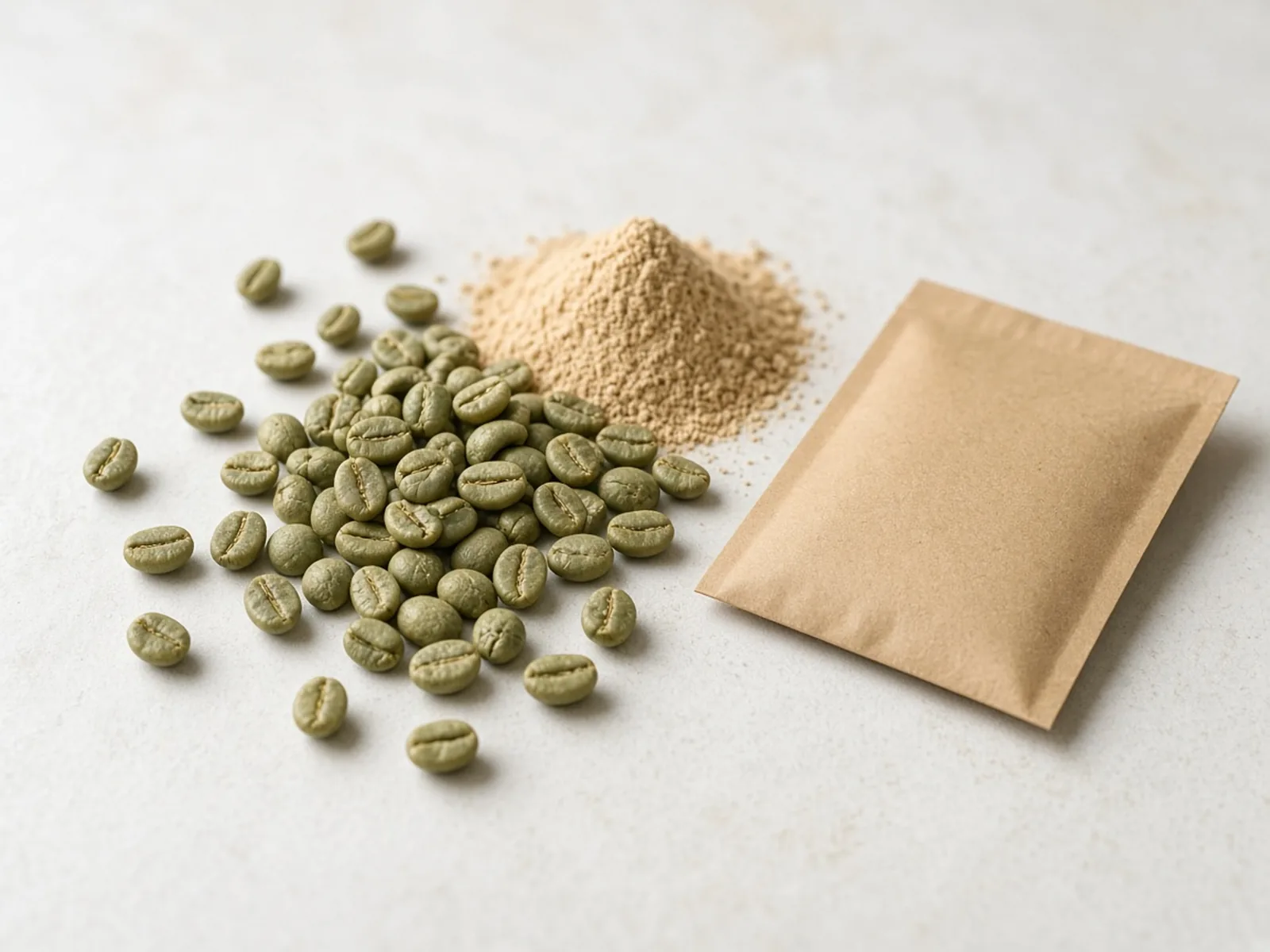
Add up the caffeine from every ingredient in one serving, including botanicals such as green tea or guarana, and declare that total clearly per serving. Evaluate flow, mixing and taste with the supplier for powder blends and sachets, and evaluate instant-drink premixes separately. Ask whether a release profile rests on laboratory dissolution data, human data, or both; per-serving limits and warning statements depend on each target market and are the brand owner's responsibility. ModernVEDA™ CaffXR™ is a sustained-release ingredient of caffeine from green coffee beans (Coffea robusta) on the CITRAP20™ citrus-fibre platform, designed for a gradual release profile in laboratory dissolution testing.
Pre-Workout and Energy Formula Checklist
| Check | What to Ask the Supplier | Why It Matters |
|---|---|---|
| Total Caffeine per Serving | What caffeine assay applies, and how much caffeine does the planned inclusion level contribute? Which other ingredients, such as green tea or guarana, also contribute caffeine? | The label and the market review use the serving total from every source, not the caffeine ingredient on its own. |
| Per-Serving Label Declaration | How will caffeine be declared per serving, and how should the ingredient and any carriers be named? | QA and regulatory reviewers need a clear per-serving caffeine figure before artwork is locked. |
| Powder Blends and Sachets | What should be evaluated for flow, mixing and taste in the powder blend or sachet? | Flow, mixing and taste are format-specific. Evaluate them with the supplier before the formula is locked. |
| Instant-Drink Premixes | Has an instant-drink premix been evaluated, and what format support is available? Is the ingredient intended for ready-to-drink liquids? | A premix is a separate evaluation from a capsule powder. Ready-to-drink liquids are a different format again. |
| Release-Profile Evidence | Is the release profile based on laboratory dissolution data, human data, or both? Which method was used? | Separates a gradual-release design from an immediate-release ingredient, without treating in-vitro data as human evidence. |
| QA and Regulatory Documents | Are a specification, CoA and stability data supplied with each enquiry? Is a dissolution data summary available on request? | Gives QA and regulatory teams a dossier path for the target market. |
| Market Limits and Warnings | Which per-serving caffeine limits and warning statements apply in the target market, and who owns the finished-product label? | Limits and warning statements differ by market. They are the brand owner's responsibility. |
Count Every Caffeine Source in the Serving
A pre-workout powder or energy formula often contains caffeine from more than one ingredient. A dedicated caffeine ingredient may sit alongside botanicals that also contain caffeine, such as green tea or guarana. Ask each supplier for the caffeine assay, apply it at the inclusion level you plan to use, and add those contributions for one serving.
Do not treat the caffeine ingredient's specification as the finished-product total. The figure that goes on the label is the caffeine in the serving from all sources. Declare that amount clearly per serving. How the amount is worded, and which warning statements are required, depends on the rules of each target market. Those finished-product decisions are the brand owner's responsibility.
Powder Blends, Sachets and Instant-Drink Premixes
Powder blends and sachets need a practical check of flow, mixing and taste with the supplier before the formula is locked. Instant-drink premixes need their own evaluation of taste, mixing and serving size. Ask whether that format has been evaluated and what support is available.
CaffXR™ suits capsules, tablets, powder blends and sachets, and is suitable for evaluation in gummies and instant-drink premixes; contact us for format support. It is not intended for ready-to-drink liquid beverages. For gummies and capsule dosage-form checks, use the separate caffeine checklist for gummies and capsules.
Laboratory Dissolution or Human Data
Immediate-release caffeine ingredients are designed to dissolve quickly. Sustained-release caffeine ingredients are designed to release caffeine more gradually. When a brief asks for extended-release or time-release caffeine, ask whether the supplier's release profile is based on laboratory dissolution data, human data, or both, and which method was used.
Laboratory dissolution data describes how an ingredient releases its active in a test system. It is not a measure of how caffeine behaves in the body, and we do not present it as such. Compare the questions to ask in Sustained-Release vs Immediate-Release Caffeine.
CaffXR™ in a Pre-Workout or Energy Formula
CaffXR™ is a sustained-release ingredient of caffeine from green coffee beans (Coffea robusta) on the CITRAP20™ citrus-fibre platform, designed for a gradual release profile in laboratory dissolution testing. Human data is not yet available; ask us for the latest status. A dissolution data summary is available on request.
On the published CaffXR™ specification, standardisation is caffeine 40% (HPLC) and suggested use is 250–500 mg per day. Those figures describe the ingredient. They are not a finished-product caffeine declaration. Use the assay to calculate the caffeine that inclusion level contributes, then add caffeine from every other ingredient in the serving. See the CaffXR™ Formulation Guide for the specification summary and the CaffXR™ Evidence Summary for data status.
Documents, Limits and Warning Statements
- Specification sheet
- Certificate of analysis (CoA)
- Stability data
- Dissolution data summary on request (where a gradual-release design is claimed)
Each enquiry receives a specification, CoA and stability data, plus a dissolution data summary on request. The brand owner confirms which additional statements the target market requires for the finished product.
Per-serving caffeine limits and any warning statements depend on the rules of each target market. They are the brand owner's responsibility. General intake guidance also differs by population. The European Food Safety Authority's scientific opinion on the safety of caffeine (EFSA Journal 2015;13(5):4102, doi:10.2903/j.efsa.2015.4102) states that single doses of caffeine up to 200 mg (about 3 mg/kg body weight for a 70 kg adult) do not give rise to safety concerns, and that habitual caffeine consumption up to 400 mg per day does not give rise to safety concerns for non-pregnant adults. The same opinion states that habitual caffeine consumption up to 200 mg per day by pregnant women does not give rise to safety concerns for the fetus, and that the information available is insufficient to derive a safe caffeine intake for children and adolescents. Those statements are general context about caffeine. They are not a specification for CaffXR™, and they do not replace the finished-product review for the market where the product will be sold.
ModernVEDA™ certifications are written ISO 9001 · GMP · FSSAI · Halal · Kosher. All ModernVEDA™ ingredients are Non-GMO, vegan and clean label.
Questions Formulators Ask About Pre-Workout and Energy Formulas
How do I total the caffeine in one serving of a pre-workout powder or energy formula?
Add the caffeine contributed by every ingredient in that serving. Include the caffeine ingredient and any other caffeine-containing botanical, such as green tea or guarana. Ask each supplier for the caffeine assay and apply it at the inclusion level you plan to use. The figure to declare is the serving total.
What should the label say about caffeine per serving?
Declare caffeine clearly per serving. The wording, any warning statement and the limit that applies depend on the target market. Those finished-product decisions are the brand owner's responsibility.
What should we evaluate for powder blends, sachets and instant-drink premixes?
Ask the supplier what to evaluate for flow, mixing and taste in a powder blend or sachet, and whether an instant-drink premix has been evaluated. CaffXR™ suits capsules, tablets, powder blends and sachets, and is suitable for evaluation in gummies and instant-drink premixes; contact us for format support. It is not intended for ready-to-drink liquid beverages.
What release-profile evidence should I ask for when a brief says extended-release or time-release caffeine?
Ask whether the release profile is based on laboratory dissolution data, human data, or both, and which method was used. Do not treat in-vitro dissolution as a measure of how caffeine behaves in the body. CaffXR™ is a sustained-release ingredient of caffeine from green coffee beans (Coffea robusta) on the CITRAP20™ citrus-fibre platform, designed for a gradual release profile in laboratory dissolution testing. Human data is not yet available; ask us for the latest status.
Is CaffXR™ synthetic caffeine?
No. CaffXR™ uses caffeine from green coffee beans (Coffea robusta).
What documentation comes with a CaffXR™ enquiry?
Each enquiry receives a specification, CoA and stability data, plus a dissolution data summary on request.
How do I request a CaffXR™ sample for a pre-workout or energy-formula trial?
Use the Request a Sample form with your format, target market and volumes. Our team will personally contact you within 1–2 business days.
Last reviewed: 20 October 2026
Request a CaffXR™ Sample
Tell us your format, target market and volumes. Our team will personally contact you within 1–2 business days.